

In recent years, global demand for edible oils has shown significant and sustained growth. This trend has attracted numerous entrepreneurs to invest in the edible oil industry, regardless of scale. If you’re planning to establish your own edible oil production plant and developing a business plan, understanding startup costs is a crucial first step.
In recent years, global demand for edible oils has shown significant and sustained growth. This trend has attracted numerous entrepreneurs to invest in the edible oil industry, regardless of scale. If you’re planning to establish your own edible oil production plant and developing a business plan, understanding startup costs is a crucial first step.
How to estimate startup costs for a mini oil mill?
Generally, the startup cost for a 5TPD edible oil production line starts around $8,000 USD. However, this figure varies based on several key factors. To help you better plan your investment, here is a breakdown of the critical elements determining the total operational costs for a small oil mill.
1. Facility and Space Costs
Any business requires sufficient space to house machinery and accommodate staff. For a mini oil mill plant, extensive premises are unnecessary. Typically, a facility producing 1-5 tons daily requires only 50 to 100 square meters. To optimize operational costs, choose a space that comfortably fits your machinery layout and workflow, avoiding payment for excess square footage. Location is also crucial—proximity to raw material sources reduces transportation costs.
2. Oil Press Machinery and Equipment Costs
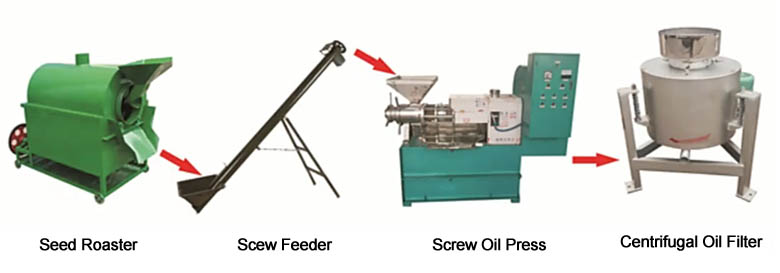
Machinery forms the core of a mini oil mill. Equipment quality, production capacity, and automation levels significantly impact your total investment. Typically required equipment includes:
- Cleaning Equipment: Removes impurities like stones, dust, and metal from seeds to protect machinery and ensure oil quality.
- Cooker Machine(Seed Roaster/Conditioner): This machine heats oilseeds (such as peanuts, rapeseed, sunflower seeds, and soybeans) to an optimal temperature. Proper conditioning is vital as it regulates oil moisture content and viscosity, ensuring maximum oil yield during pressing. We offer both electric and biomass-fueled cookers to accommodate varying energy supply and cost preferences.
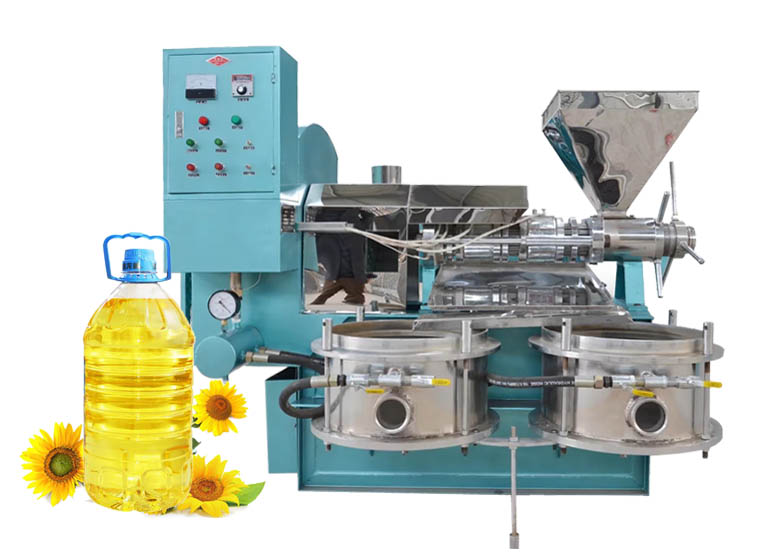
- Oil Press (Screw Oil Press): The core equipment for mini oil mills. Screw oil presses are the most commonly used devices in small mills due to their efficiency, durability, and ability for continuous operation. Modern oil presses feature advanced automation, precise temperature control, and higher output. You may also opt for integrated oil presses that combine pressing with built-in vacuum filtration, enabling one-step production of pure oil. The processing capacity of your chosen press (e.g., 1 ton/day, 5 tons/day) directly impacts the core equipment’s cost.
- Oil Filters and Refining Equipment: After pressing, crude oil contains impurities and solid particles. Filtration is essential for obtaining high-quality oil. Plate-and-frame filter presses or vacuum oil filters are commonly used clarification devices. If you use premium, fresh, mold-free oilseeds, simple mechanical filtration may suffice for direct consumption or local sales. However, if you plan to package and sell branded oil to supermarkets or extend shelf life, investing in small-scale refining equipment is necessary to remove free fatty acids, off-flavors, and pigments.
- Oil Filling Machines: For automated packaging, semi-automatic or fully automatic filling machines can be integrated into the production line to enhance filling efficiency.
3. Labor Costs
Mini oil mills do not require extensive labor. Typically, 2 to 3 skilled operators suffice for daily operations. One person handles seed feeding and machine monitoring, while another manages oil filtration, packaging, and quality inspection. A third person may be needed for maintenance, procurement, and sales. Labor costs will vary based on your location and local wage standards.
4. Other Costs to Consider
- Raw Materials: The cost of seeds (sunflower seeds, soybeans, rapeseed, etc.) represents a significant recurring operational expense. Establishing a reliable supply chain is crucial.
- Utilities: Electricity or fuel for cooking equipment and power for the oil press constitute ongoing operational costs.
- Installation and Commissioning: Some suppliers include installation and training in the equipment cost, while others may charge separately.
- Packaging Materials: Bottles, labels, caps, and cartons are required if you plan to sell packaged oil.
- Permits and Licenses: Food safety licenses, business registrations, and GST/tax registrations are mandatory and involve fees.
Why Choose Turnkey Solutions?
For entrepreneurs seeking simplicity and convenience, we offer turnkey project solutions for mini oil mills and industrial-scale edible oil production plants. Each solution is customized based on your specific raw materials, production capacity goals, investment budget, and other factors. Ready to launch your edible oil venture? Contact us today for a free consultation and tailored business plan, along with a precise investment cost estimate customized to your needs!